 (989) 239-8838
How to Identify Storm Damage on Your Roof Before It Leads to Leaks
Why Early Detection Saves Money and Prevents Damage
Michigan’s climate presents unique challenges for homeowners, particularly in the Chesaning area where seasonal weather patterns can be severe. Between heavy snow loads in winter, ice dam formation during freeze-thaw cycles, and intense summer storms with high winds and hail, your roof faces constant stress throughout the year. Understanding how to identify storm damage early can mean the difference between a simple repair and a catastrophic leak that damages your home’s interior.
Most homeowners don’t realize that storm damage often begins as minor issues that escalate over time. A few missing granules after a hailstorm might seem insignificant, but they compromise your shingle’s protective layer. When spring rains arrive or snow melts, water finds these weak points and begins infiltrating your roof deck. By the time you notice water stains on your ceiling, the damage has often spread to insulation, framing, and drywall, turning a manageable repair into a costly renovation project.
In central Michigan, we experience an average of 30-40 thunderstorm days per year, with peak activity from May through August. Winter brings additional concerns, as heavy snow accumulation can exceed 50 inches annually in our region. This combination of seasonal stressors means your roof requires vigilant monitoring, especially after significant weather events. Learning to spot the warning signs allows you to address problems before they compromise your home’s structural integrity or lead to mold growth in hidden spaces.
Ground-Level Inspection: What to Look For
You don’t need to climb onto your roof to perform an initial damage assessment. From ground level, use binoculars to examine your shingles for several telltale signs. Look for shingles that appear darker or discolored, which often indicates moisture absorption. Check for curling edges, missing sections, or shingles that lie flat when they should overlap. After a hailstorm, watch for random patterns of damage across different roof planes, as hail doesn’t discriminate between north and south-facing slopes.
Pay close attention to your roof’s valleys and edges, where wind damage typically starts. High winds can lift shingle edges, breaking the seal and allowing water penetration. You might notice shingle granules collecting in your gutters or washing down your downspouts, a clear sign that your roof’s protective surface is deteriorating. These granules act like sunscreen for your shingles, and once they’re gone, the asphalt underneath degrades rapidly under UV exposure.
Inspect your flashing around chimneys, vent pipes, and skylights. Storm winds can loosen these critical waterproofing elements, creating entry points for moisture. Look for rust spots, gaps, or sections that appear bent or lifted. Your gutters deserve equal attention. Sagging sections, separated seams, or gutters pulling away from the fascia board indicate either storm damage or the added weight of debris and standing water. These issues often compound roof problems by allowing water to back up under shingles at the roof edge.
If you notice any of these warning signs, consider scheduling a professional evaluation through our roof repair services to assess the extent of damage and prevent further deterioration.
Interior Warning Signs You Shouldn’t Ignore
While exterior signs provide obvious clues, some of the most serious storm damage reveals itself inside your home. Start by examining your ceilings for water stains, which often appear as brown or yellow discoloration. These stains typically form rings and may grow larger after rain events. Even small stains signal that water has breached your roof and traveled through insulation and structural components. Don’t dismiss minor staining; water follows the path of least resistance and might be pooling elsewhere in your attic or wall cavities.
Your attic offers the best vantage point for detecting hidden damage. On a sunny day, turn off attic lights and look for pinpoints of light penetrating through the roof deck. These indicate holes or gaps where water can enter. Use a flashlight to inspect the underside of your roof sheathing for dark streaks, water stains, or damp spots. Feel the insulation for moisture, particularly after recent storms. Wet insulation loses its R-value and creates ideal conditions for mold growth, which poses health risks and requires expensive remediation.
Check your attic’s ventilation systems as well. Storm damage can dislodge soffit vents or damage ridge vents, disrupting airflow that prevents moisture buildup. Poor ventilation accelerates ice dam formation during winter months when warm air from your living spaces rises into the attic. Look for condensation, frost buildup on nails protruding through the roof deck, or musty odors, all of which suggest ventilation problems compounded by potential storm damage.
Interior warning signs often indicate that damage has progressed beyond simple repairs. If you discover any of these issues, contact professionals who specialize in storm damage roof repair to evaluate both visible and hidden damage throughout your roofing system.
Professional Assessment: When to Call an Expert
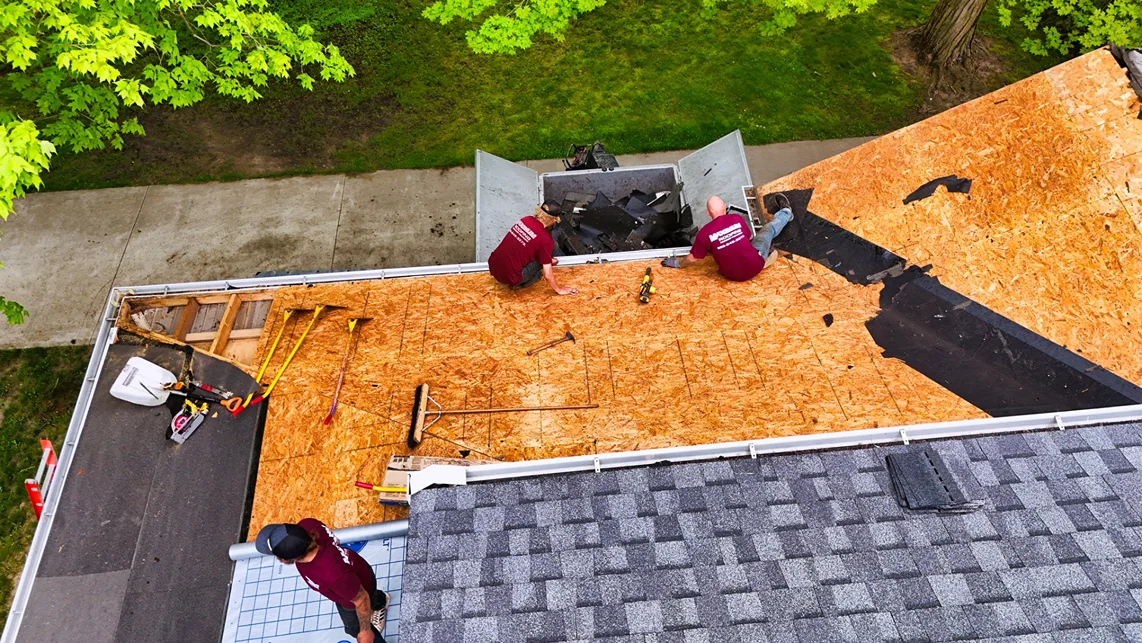
While homeowner inspections provide valuable initial assessments, professional evaluation remains essential after significant storms. Licensed roofing contractors possess training and equipment to safely access all roof areas, including steep slopes and high peaks that pose safety risks for homeowners. They recognize subtle damage patterns that untrained eyes often miss, such as microscopic shingle fractures from hail impact or compromised seal strips that will fail during the next weather event.
A thorough professional inspection covers more than surface-level observations. Contractors examine roof decking integrity, evaluate flashing installations, test sealants around penetrations, and assess the overall structural condition of your roofing system. They use moisture meters to detect hidden water intrusion and thermal imaging to identify areas where insulation has been compromised by leaks. This technology reveals problems invisible to visual inspection alone, allowing for targeted repairs before damage spreads.
Professional inspectors also provide crucial documentation for insurance claims. After severe weather, they photograph damage, measure affected areas, and prepare detailed reports that support your claim submission. Insurance companies often require professional assessments to process storm damage claims, and having this documentation expedites the approval process. Contractors familiar with local building codes ensure that any repairs meet current standards, which is particularly important if your home was built before recent code updates.
Scheduling regular roof maintenance services establishes a baseline condition for your roof, making it easier to identify new storm damage when it occurs. Professionals can spot developing issues before they require emergency intervention, saving you money and protecting your home’s value. If your initial inspection raises concerns, don’t delay professional evaluation. Waiting allows minor damage to escalate, potentially voiding insurance coverage if the insurer determines you failed to mitigate further damage after a known storm event.
Taking Action: Next Steps After Discovering Damage
While homeowner inspections provide valuable initial assessments, professional evaluation remains essential after significant storms. Licensed roofing contractors possess training and equipment to safely access all roof areas, including steep pitches and complex structures that pose safety risks to homeowners. Contact a professional immediately if you notice multiple damaged shingles, sagging roof sections, extensive granule loss, or any interior water damage.
A comprehensive professional inspection examines structural integrity, flashing condition, ventilation systems, and hidden damage that ground-level observations cannot reveal. Contractors use moisture meters to detect trapped water within roofing layers, infrared cameras to identify temperature variations indicating leaks, and detailed documentation methods that support insurance claims. This thorough approach identifies problems before they escalate into costly emergencies requiring full roof replacement.
In the Chesaning area, seasonal inspection timing matters significantly. Schedule professional assessments in spring after ice dam season ends and again in fall before winter weather arrives. These strategic timing windows allow contractors to address minor damage before Michigan’s harsh winter conditions worsen existing problems. Establishing a relationship with local roof maintenance services ensures faster response times when storm damage occurs and provides continuity of care for your roofing system throughout its lifespan.